
Leveraging Kotlin’s Type System to Guard Code Quality and Prevent Errors
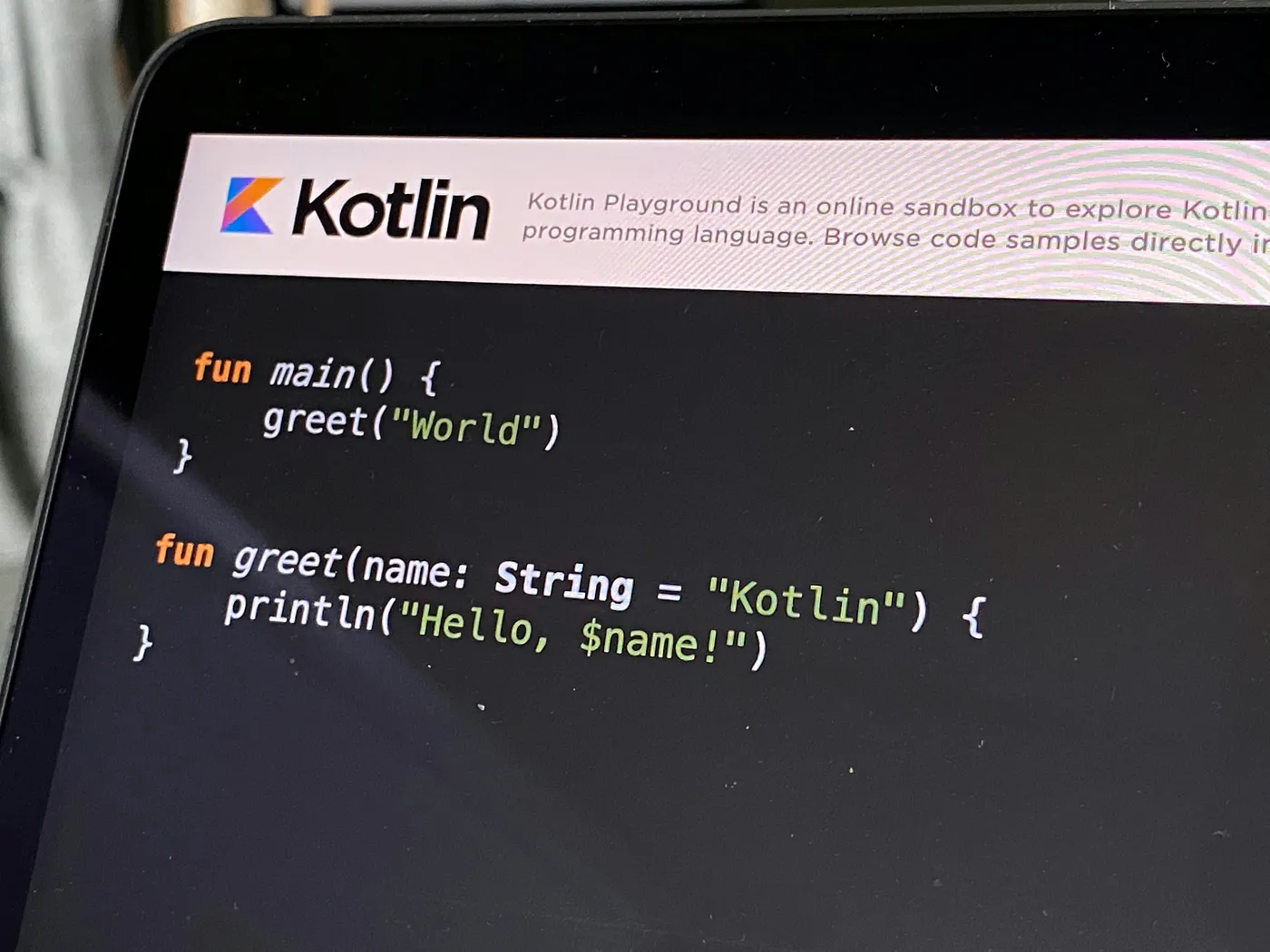
In modern software development, preventing bugs before they happen is infinitely more valuable than fixing them after they’ve occurred. Kotlin provides developers with a powerful type system specifically designed to catch errors at compile time rather than runtime. This article explores how Kotlin’s sophisticated type features can be leveraged to write safer, more maintainable code.
Introduction
Kotlin’s philosophy embraces “null safety by default” and “making illegal states unrepresentable” — principles that guide its type system design, which makes the language more productive and concise while still providing robust guardrails against common programming errors.
Null Safety
The “billion-dollar mistake” — the invention of the null reference — has plagued Java developers for decades. Kotlin addresses this issue head-on with its type system by making a clear distinction between nullable and non-nullable types.
// Non-nullable String - can never be null
val definitelyNotNull: String = "Hello"
// Nullable String - can contain null
val mightBeNull: String? = null
// This would not compile
val willCauseError: String = null // Error: Null can not be a value of a non-null type String
Kotlin provides several operators to work safely with nullable types:
// Safe call operator (?.) - safely access properties on nullable references
val length = mightBeNull?.length // Type is Int?
// Elvis operator (?:) - provide a default value when reference is null
val lengthOrDefault = mightBeNull?.length ?: 0 // Type is Int
// Not-null assertion (!!) - for when you're absolutely sure it's not null
// (use with caution - this can throw NullPointerException)
val forcedLength = mightBeNull!!.length
When working with Java interoperability, Kotlin introduces platform types (denoted as String! in error messages). These represent Java types whose nullability is unknown:
// Java code
public class JavaClass {
    public String mayBeNull() {
        return Math.random() > 0.5 ? "Hello" : null;
    }
}
// Kotlin code
val javaResult = JavaClass().mayBeNull() // Platform type
// Kotlin doesn't force null checks here, but you should be careful!
Type Inference
Kotlin’s robust type inference system reduces boilerplate while maintaining type safety:
// Type inference for local variables
val name = "Kotlin" // Compiler infers String
val list = listOf(1, 2, 3) // Compiler infers List<Int>

// Type inference for function return types
fun greet() = "Hello" // Return type inferred as String
// Type inference for lambda parameters
val doubles = list.map { it \* 2 } // "it" is inferred as Int
Smart Casts
Kotlin’s smart casts eliminate redundant explicit casting when the compiler can guarantee type safety:
fun process(value: Any) {
    if (value is String) {
        // value is automatically cast to String inside this block
        println(value.length) // No need for explicit casting
    }

    // Outside the if-block, value is back to type Any
    // println(value.length) // This would not compile
}
Smart casts also work with null checks:
fun processNullable(value: String?) {
    if (value != null) {
        // value is automatically cast to non-nullable String
        println(value.length) // Safe to access .length here
    }
}
There are limitations with mutable properties:
class Example {
    var mutableProperty: Any = "Hello"

    fun process() {
        if (mutableProperty is String) {
            // Smart cast isn't allowed - property could change between check and use
            // println(mutableProperty.length) // Doesn't compile

            // Need explicit cast
            println((mutableProperty as String).length)
        }
    }
}
Data Classes
Data classes prevent common errors in model classes by automatically generating equals(), hashCode(), and toString() implementations:
data class User(val id: Int, val name: String, val email: String)

// Automatic equals() and hashCode()
val user1 = User(1, "Alice", "[email protected]")
val user2 = User(1, "Alice", "[email protected]")
println(user1 == user2) // true - structural equality
// Automatic toString()
println(user1) // User(id=1, name=Alice, [email protected])
// Copy function for immutable data handling
val user3 = user1.copy(email = "[email protected]")
// Destructuring declarations
val (id, name, \_) = user1 // Only extract id and name
Sealed Classes and Interfaces
Sealed classes create restricted class hierarchies that enable exhaustive when statements:
sealed class Result {
    data class Success(val data: String) : Result()
    data class Error(val message: String, val code: Int) : Result()
    object Loading : Result()
}

fun handleResult(result: Result) {
    // The when statement must cover all possible subclasses
    when (result) {
        is Result.Success -> println("Success: ${result.data}")
        is Result.Error -> println("Error ${result.code}: ${result.message}")
        Result.Loading -> println("Loading...")
        // No else branch needed - compiler knows all cases are covered
    }
}
Value Classes (Inline Classes)
Value classes create zero-overhead wrappers for primitive types, preventing “primitive obsession”:
@JvmInline
value class UserId(val value: Int)
@JvmInline
value class AccountId(val value: Int)
// Now these are different types at compile time
fun processUser(userId: UserId) { /\* ... \*/ }
fun processAccount(accountId: AccountId) { /\* ... \*/ }
val userId = UserId(1)
val accountId = AccountId(1)
processUser(userId) // Works
// processUser(accountId) // Compile error - type mismatch
// processUser(1) // Compile error - type mismatch
At runtime, value classes are represented by their underlying type, avoiding the performance overhead of wrapper objects.
Phantom Types
Phantom types are a powerful type-level programming technique that uses generic parameters that don’t appear in the implementation:
// A generic wrapper with a phantom type parameter
class Tagged<TAG, T>(val value: T) {
    // No actual use of TAG in the implementation
}

// Tags to differentiate between different types
object Validated
object Unvalidated
// Type aliases for better readability
typealias ValidatedEmail = Tagged<Validated, String>
typealias UnvalidatedEmail = Tagged<Unvalidated, String>
// Function that only accepts validated emails
fun sendEmail(email: ValidatedEmail) {
    // Safe to use - we know it's validated
    println("Sending email to ${email.value}")
}
// Validation function that converts from unvalidated to validated
fun validateEmail(email: UnvalidatedEmail): ValidatedEmail? {
    return if (email.value.contains("@")) {
        Tagged(email.value)
    } else {
        null
    }
}
// Usage
val userInput = Tagged<Unvalidated, String>("[email protected]")
// sendEmail(userInput) // Compile error - type mismatch
val validatedEmail = validateEmail(userInput)
validatedEmail?.let { sendEmail(it) } // Works fine
This pattern is extremely useful for enforcing proper process flow at compile time.
Type Refinement with Generic Constraints
Kotlin allows powerful type refinement using generic constraints:
// T must be a subtype of Comparable<T>
fun <T> findMax(list: List<T>) where T : Comparable<T> {
    // Implementation can safely use .compareTo()
}

// Multiple constraints
interface Repository
interface Cacheable
// T must implement both Repository and Cacheable
fun <T> enableCaching(repo: T) where T : Repository, T : Cacheable {
    // Implementation
}
Dependent Types Simulation
While Kotlin doesn’t have true dependent types, we can simulate some aspects:
// State machine with phantom types
sealed class State
object Empty : State()
object Filled : State()

class Container<S : State> private constructor(val items: List<String>) {
    companion object {
        fun empty(): Container<Empty> = Container(emptyList())
    }

    // This operation is only available when container is empty
    fun fill(items: List<String>): Container<Filled> = Container(items)
}
// This extension function is only available on Filled containers
fun <S : Filled> Container<S>.process(): List<String> {
    return items.map { it.uppercase() }
}
// Usage
val empty = Container.empty()
val filled = empty.fill(listOf("apple", "banana"))
val processed = filled.process()
// Won't compile - can't call process() on empty container
// empty.process()
// Won't compile - can't call fill() on filled container
// filled.fill(listOf("cherry"))
Advanced Generic Patterns
Kotlin supports complex generic scenarios:
// F-bounded polymorphism
interface Comparable<in T> {
    fun compareTo(other: T): Int
}

// Self-recursive type constraints
interface Builder<T : Builder<T>> {
    fun withName(name: String): T
    fun withAge(age: Int): T
    fun build(): Any
}
class PersonBuilder : Builder<PersonBuilder> {
    private var name: String = ""
    private var age: Int = 0

    override fun withName(name: String): PersonBuilder {
        this.name = name
        return this
    }

    override fun withAge(age: Int): PersonBuilder {
        this.age = age
        return this
    }

    override fun build(): Any {
        return "Person(name=$name, age=$age)"
    }
}
// Usage
val person = PersonBuilder()
    .withName("Alice")
    .withAge(30)
    .build()
Extension Functions and Properties
Extension functions provide type-safe extensions without inheritance:
// Add functionality to String class
fun String.toTitleCase(): String {
    return this.split(" ")
        .joinToString(" ") { it.capitalize() }
}

// Usage
val title = "kotlin type system".toTitleCase() // "Kotlin Type System"

// Extension property
val String.lastChar: Char
    get() = this\[length - 1\]

// Receiver type safety - only available on specific types
fun List<Int>.sum(): Int = this.reduce { acc, i -> acc + i }
// "hello".sum() // Won't compile - String doesn't have sum() extension
Delegation
Interface delegation helps avoid inheritance issues:
interface Writer {
    fun write(message: String)
}

class ConsoleWriter : Writer {
    override fun write(message: String) {
        println(message)
    }
}
// Delegation with "by" keyword
class LoggingWriter(private val writer: Writer) : Writer by writer {
    fun writeWithTimestamp(message: String) {
        write("\[${System.currentTimeMillis()}\] $message")
    }
}
// Property delegation
class Person {
    // Lazy initialization - only computed on first access
    val heavyComputation: String by lazy {
        println("Computing...")
        "Result of heavy computation"
    }

    // Observable property
    var name: String by Delegates.observable("") { \_, old, new ->
        println("Name changed from $old to $new")
    }
}
Generics Improvements
Kotlin improves on Java’s generics with variance annotations:
// Declaration-site variance
// "out" is like Java's <? extends T>
interface Source<out T> {
    fun get(): T // Can only return T, not consume it
}

// "in" is like Java's <? super T>
interface Sink<in T> {
    fun add(item: T) // Can only consume T, not return it
}
// Reified generics with inline functions
inline fun <reified T> isType(value: Any): Boolean {
    return value is T // Works because T is reified
}
// Usage
println(isType<String>("Hello")) // true
println(isType<Int>("Hello")) // false
Type Aliases
Type aliases simplify complex type signatures:
// Without type alias
fun processMap(map: Map<String, List<Pair<Int, String>>>): Map<Int, List<String>> {
    // Implementation
}

// With type alias
typealias UserData = Pair<Int, String>
typealias UserList = List<UserData>
typealias UserMap = Map<String, UserList>
typealias ResultMap = Map<Int, List<String>>
fun processMap(map: UserMap): ResultMap {
    // Implementation is much more readable
}
Nothing Type and Exhaustiveness
The Nothing type represents a value that never exists:
// Function that never returns normally
fun fail(message: String): Nothing {
    throw IllegalStateException(message)
}

// Useful for exhaustiveness checks
fun process(value: String?): String {
    return value ?: fail("Value cannot be null")
    // No need for else branch - compiler knows all paths are covered
}
// Using Nothing in generics
fun <T> emptyList(): List<T> = listOf()
val list: List<Nothing> = emptyList() // Most specific empty list type
Algebraic Data Types
Kotlin supports algebraic data types through sealed classes and data classes:
// Sum type (OR relationship)
sealed class Either<out A, out B> {
    data class Left<A>(val value: A) : Either<A, Nothing>()
    data class Right<B>(val value: B) : Either<Nothing, B>()
}

// Product type (AND relationship)
data class Person(val name: String, val age: Int, val email: String)
// Pattern matching on algebraic data types
fun <A, B, C> Either<A, B>.fold(
    ifLeft: (A) -> C,
    ifRight: (B) -> C
): C = when (this) {
    is Either.Left -> ifLeft(value)
    is Either.Right -> ifRight(value)
}
Result and Either Types
Type-safe error handling with Result:
sealed class Result<out T, out E> {
    data class Success<T>(val value: T) : Result<T, Nothing>()
    data class Failure<E>(val error: E) : Result<Nothing, E>()
}

fun divide(a: Int, b: Int): Result<Int, String> {
    return if (b == 0) {
        Result.Failure("Division by zero")
    } else {
        Result.Success(a / b)
    }
}
// Usage
val result = divide(10, 2)
when (result) {
    is Result.Success -> println("Result: ${result.value}")
    is Result.Failure -> println("Error: ${result.error}")
}
// Function to transform results
fun <T, E, R> Result<T, E>.map(transform: (T) -> R): Result<R, E> {
    return when (this) {
        is Result.Success -> Result.Success(transform(value))
        is Result.Failure -> this
    }
}
Type-Safe Builder Pattern
Kotlin’s DSL capabilities for type-safe builders:
class HtmlBuilder {
    private val result = StringBuilder()

    fun div(init: DivBuilder.() -> Unit) {
        result.append("<div>")
        val div = DivBuilder()
        div.init()
        result.append(div.build())
        result.append("</div>")
    }

    fun build(): String = result.toString()
}

class DivBuilder {
    private val content = StringBuilder()

    fun p(text: String) {
        content.append("<p>$text</p>")
    }

    fun span(text: String) {
        content.append("<span>$text</span>")
    }

    // Nesting is type-safe
    fun div(init: DivBuilder.() -> Unit) {
        content.append("<div>")
        val div = DivBuilder()
        div.init()
        content.append(div.build())
        content.append("</div>")
    }

    fun build(): String = content.toString()
}
// Usage
val html = HtmlBuilder().apply {
    div {
        p("Hello")
        span("Kotlin")
        div {
            p("Nested content")
        }
    }
}.build()
Designing for Immutability
// Prefer val over var
data class User(
    val id: String,
    val name: String,
    val email: String
)

// Immutable collections
val immutableList = listOf(1, 2, 3)
val immutableMap = mapOf("a" to 1, "b" to 2)
// Creating modified copies instead of mutating
val user = User("1", "Alice", "[email protected]")
val updatedUser = user.copy(email = "[email protected]")
Preferring Composition Over Inheritance
// Prefer this:
class EmailSender(private val templateEngine: TemplateEngine,
                  private val transportService: TransportService) {
    // Implementation
}

// Over inheritance:
// class EmailSender : TemplateEngine() {
//     // Implementation that inherits and extends TemplateEngine
// }
Conclusion
Kotlin’s type system stands as one of its greatest strengths, offering a balance between safety and ergonomics that few other languages achieve. By leveraging these features, developers can prevent entire categories of bugs before code even reaches production.
Remember: The best bug is the one that never makes it into production because the compiler caught it first :)
Sharing is caring!